

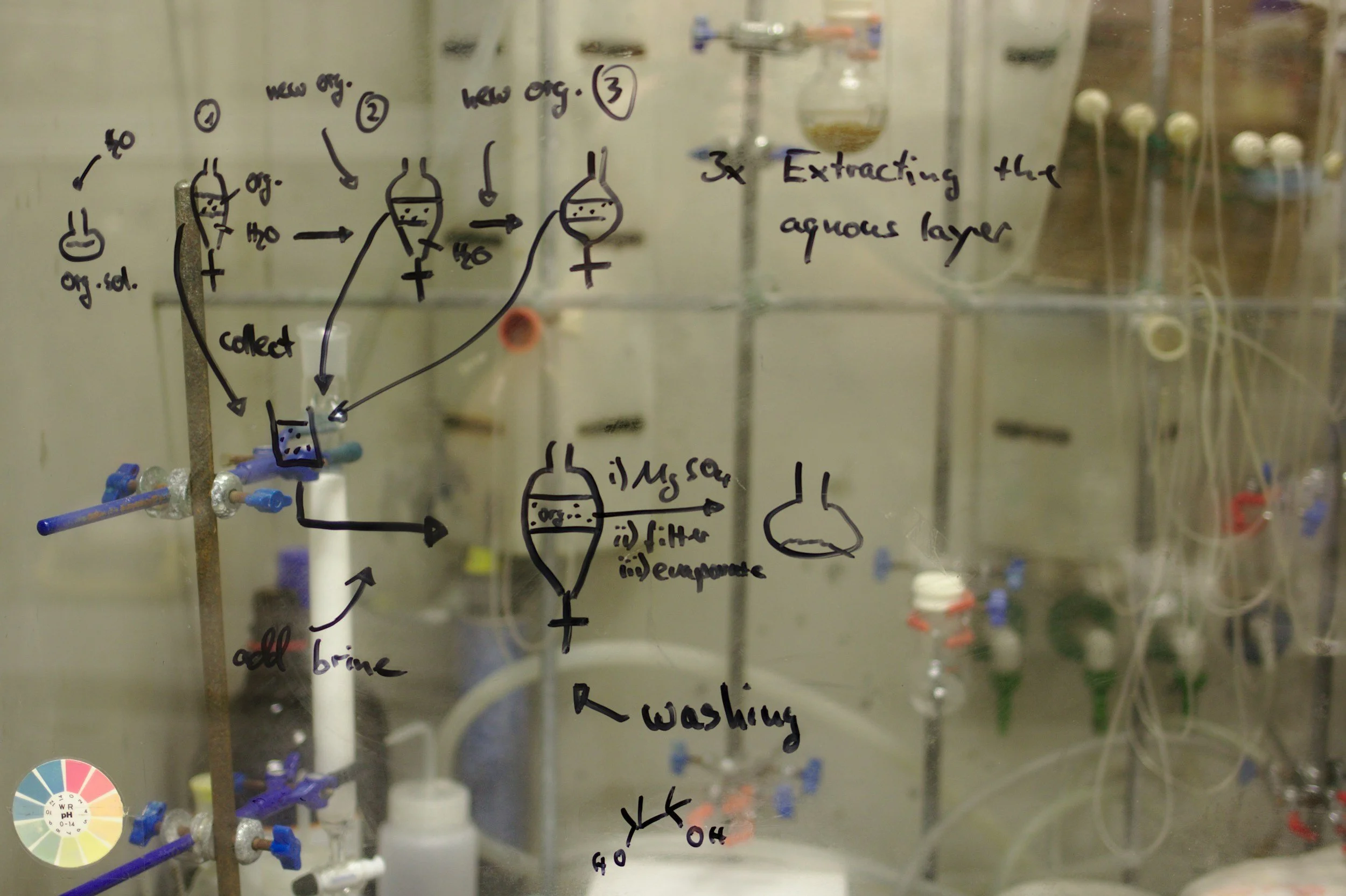
A-Level Chemistry – Structured Online Support That Turns Content into Marks
For Year 12–13 students who find A-Level Chemistry dense and detail-heavy – and need a clear way to turn topics, mechanisms and calculations into reliable exam marks.
Specialist one-to-one A-Level Chemitry support, aligned to your exam board and the time you have left.

Who A-Level Chemistry Support Is For
This page is for you if your child is:
In Year 12 or 13, taking A-Level Chemistry with AQA, Edexcel, OCR A or OCR B.
Feeling overwhelmed by the amount of content – especially when topics like moles, equilibria, redox or organic mechanisms start to stack up.
Sitting on C/D or low B grades in class tests or mocks and wants a structured push towards B/A or A*.
Fine with some parts of the course but consistently leaking marks on calculation questions, multi-step mechanisms, or longer written answers.
Aiming for a STEM degree or health-related route (Medicine, Dentistry, Pharmacy, Biomed, Chemical Engineering, etc.) where Chemistry is a key requirement.
If your child is already on a solid A and wants to aim for A*, we’ll talk honestly in the Grade Roadmap Meeting about whether a standard package or an A/A* Exam Lab style intensive makes more sense.
EXAM BOARDS WE support
We support all major A-Level Chemistry specifications:
AQA A-Level Chemistry
Edexcel A-Level Chemistry
OCR A A-Level Chemistry
OCR B (Salters) A-Level Chemistry
Across boards, we cover the full A-Level Chemistry journey, including:
Physical Chemistry: atomic structure, bonding, energetics, kinetics, equilibria, acids & bases, redox
Inorganic Chemistry: periodicity, Group 2/7, transition metals, complex ions
Organic Chemistry: formulae and isomerism, mechanisms, functional groups, synthesis and analysis
Practical Skills & Data: core practicals, planning, risk assessment, uncertainties, errors, graphs, data interpretation and evaluation
We don’t just “go through chapters” – we train students to link ideas across the course and answer questions in the way Chemistry examiners expect to see them.
How We Teach A-Level Chemistry at Spacetime
A-Level Chemistry at Spacetime is not just more notes and revision cards. We use a consistent approach:
Diagnostic first
We look at tests, past papers and classwork to see where marks are leaking – moles & calculations, mechanisms, multi-step questions, practical/data work, or exam technique.
Connect ideas, not just memorise facts
We show how topics link together – for example, how bonding affects energetics, or how mechanisms link to conditions and products – so students aren’t trying to hold hundreds of isolated facts.
Use diagrams, models and worked examples
We make heavy topics more manageable by combining clear explanations, visual models and worked examples before moving into exam questions.
Drill with board-style questions
Once a concept is clear, we move quickly into exam-board-style questions and variations, including calculation questions, mechanisms, and practical/data questions.
Train exam behaviour
We work on reading, planning and structuring answers: what to state, what to justify, how to lay out calculations, and how to write clear explanations that pick up marks.
Lessons are live, one-to-one, and tailored to your child’s exam board and current position – but always within this structure.
A-Level Chemistry Packages
We don’t sell endless hourly lessons. A-Level Chemistry support is offered through clear packages with a fixed number of lesson credits, a recommended time frame and a sensible expiry.
That way there’s enough flexibility for real life, but not so much that momentum disappears.
You’ll choose the exact package (and focus areas) in your Grade Roadmap Meeting or on our booking pages, but this is the basic structure:
1. A-Level Physics Topic Mastery Packs
Best for:
Students who are mostly okay in Chemistry but have one or two weak areas that reliably drag grades down (for example, moles & calculations, equilibria, redox, organic mechanisms, or practical/data skills).
What it does:
Targets one main topic or tight cluster of skills (e.g. Moles & Stoichiometry, Equilibria, Redox, Organic Basics, Mechanisms, Practical & Data Skills).
Rebuilds understanding with clear explanations, diagrams, worked examples and key patterns.
Uses exam-board-style questions so that topic becomes predictable, not a blind spot.
Typical size & pace:
Each Topic Mastery pack has its own number of lessons and focus area.
Most Topic packs are designed to run over roughly 4–6 weeks of consistent lessons.
Expiry & why (approx.):
Expiry: 60 days from the first lesson.
The teaching plan assumes about 4–6 weeks of work, but 60 days gives a realistic buffer for illness, tests in other subjects and family life, while keeping the pack short and focused so the topic doesn’t fade between sessions.
How you’ll book it:
On our A-Level Chemistry booking page, there will be a dedicated Topic Mastery section. From there you’ll be able to:
See all available Topic Mastery packs (e.g. Moles, Equilibria, Redox, Organic, Practical & Data), and
Choose the one that matches your child’s main weak area – or pick the closest and let us confirm after an initial diagnostic.
If you’re not sure which topic is the real bottleneck, you can always book a Grade Roadmap Meeting first and we’ll recommend the right pack.
2. A-Level Chemistry Exam Accelerators
Best for:
Students heading towards mocks or final exams who are stuck around C/B and need a structured push towards B/A or A* in the time left.
What it does:
Focuses on the heaviest-weighted and most problematic areas for that student (for example, key Physical topics, high-yield Organic areas, and the practical/data questions that keep leaking marks).
Builds a timed-paper routine, including sections of real past papers under time, marking and corrections.
Works on mark conversion – turning half-remembered content and partial working into clear, examiner-friendly answers.
Typical size & pace:
Usually around 10–12 lessons over 10–12 weeks.
We offer board-specific Exam Accelerators for AQA, Edexcel, OCR A and OCR B to match the way each specification tests and structures its papers.
Expiry & why (approx.):
Expiry: 120 days from the first lesson.
The recommended teaching window is 10–12 weeks, but 120 days (around 4 months) gives enough flex for mocks, practical days and busy periods, while keeping the programme tight and exam-focused.
How you’ll book it (once booking page is live):
On the A-Level Chemistry booking page, the Exam Accelerator section will show the available board-specific options. From there you’ll be able to:
Choose an Exam Accelerator for your child’s exam board (AQA, Edexcel, OCR A or OCR B), and
See the number of lessons and basic structure before you confirm.
If you’re unsure whether an Accelerator or a longer Full Mastery route is better, it’s worth booking a Grade Roadmap Meeting first and we’ll advise honestly.
3. A-Level Chemistry Full Mastery & Core Programmes
Best for:
Students who have time (ideally starting in Year 12 or early Year 13) and want A-Level Chemistry to feel solid from first principles to full exam papers – not a last-minute rescue.
What it does:
Systematically strengthens core content across Physical, Inorganic and Organic Chemistry, plus practical/data skills.
Runs alongside school, helping students stay ahead of class, consolidate properly and avoid the “everything hits at once” feeling in Year 13.
Includes regular checkpoints using full exam questions and papers, so there are no surprises when exam season arrives.
Typical size & pace:
We offer a small family of Full Mastery & Core programmes:
AS Core Foundation Programme – focussed on Year 12 / AS content and core exam skills.
A2 Core Mastery Programme – focussed on Year 13 / A2 content and higher-level questions.
Full Mastery Programme – a longer, end-to-end route that supports students across most or all of the course.
Each programme is usually around 20–24+ lessons over roughly 20–24 weeks (about 5–6 months), with pace adjusted to when students join and which Core route is chosen.
Expiry & why (approx.):
Expiry: 240 days from the first lesson.
The teaching plan assumes a 20–24 week runway, but 240 days (about 8 months) allows for holidays, mocks, practical days, coursework deadlines and life events, while still keeping the programme moving at a sensible pace.
How you’ll book it:
On the A-Level Chemistry booking page, the Full Mastery & Core section will show:
AS Core Foundation,
A2 Core Mastery, and
Full Mastery Programme options.
From there you’ll be able to:
See the programme length and basic outline for each, and
Choose the option that fits your child’s timeline, entry point and target grades.
If you’re hesitant about committing to a longer programme, book a Grade Roadmap Meeting and we can talk through whether a Core/Full route or a shorter Accelerator makes more sense.
4. A/A* Exam Labs & Lab+ Add-On
Best for:
Strong A-Level Chemistry students already working around a B/C who are aiming for an A or A* and are ready to commit to a short, intense block of work.
What it does:
Runs over a tight 10–12 week window leading into key exams or mocks.
Focuses heavily on A/A*-level questions, multi-step mechanisms, synoptic questions and demanding practical/data items.
Rehearses exam behaviour with timed sections, marked scripts, rewrites and re-tests, so high-level performance becomes repeatable and less dependent on “a friendly paper”.
Typical size & pace:
Typically 10–12 lessons over 10–12 weeks, with clear expectations for independent practice and script corrections between lessons.
For students who need a little more time or want extra high-level practice, we offer an “A/A Lab+ Upgrade Add-On” (a short extension pack of extra sessions attached to any Chemistry Exam Lab).
Expiry & why (approx.):
Expiry: 120 days from the first lesson.
The Lab itself is designed as a focused 10–12 week sprint, but 120 days gives a small buffer for illness or unavoidable clashes without losing the intensity and momentum that make a Lab effective.
How you’ll book it:
When the A-Level Chemistry booking page is live, there will be a dedicated Exam Lab section. From there you’ll be able to:
See available A/A* Exam Lab options for AQA, Edexcel, OCR A and OCR B, and
Enquire about a Lab that matches your child’s exam timeline.
If needed, add an A/A Lab+ Upgrade Add-On after we’ve agreed that a Lab is the right route.
Because Labs are intensive and selective, we’ll usually confirm suitability through either:
A Grade Roadmap Meeting, or
An initial diagnostic lesson, before the full Lab (and any Lab+ upgrade) is activated.
If you’re interested in an Exam Lab but not sure if it’s the right fit, you can book a Grade Roadmap Meeting and we’ll talk it through honestly.
Who will Teach A-Level chemistry?
A-Level Chemistry at Spacetime is led by a specialist educator who works across GCSE and KS5 Chemistry, with a growing focus on 16+ programmes.
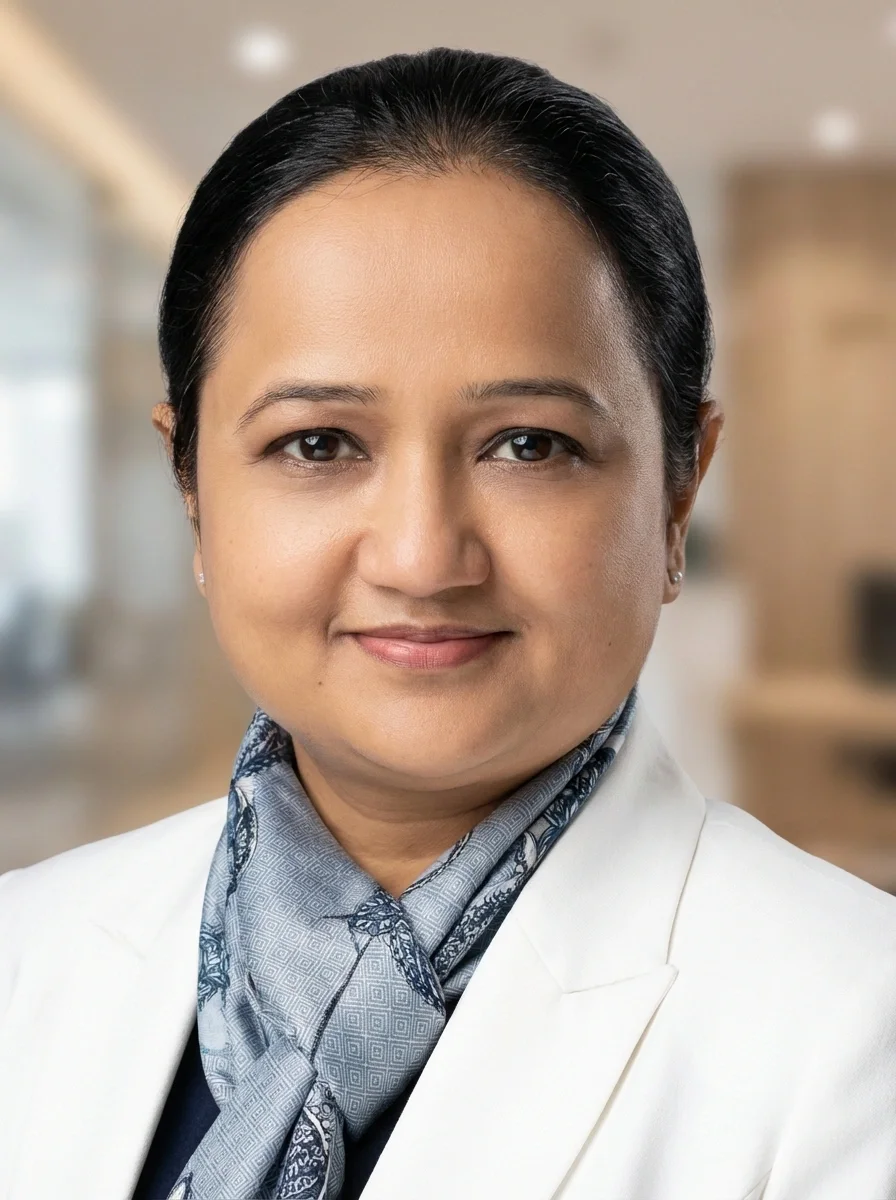
A-Level Chemistry Educator: Riddhi Kunchwar (Qualified Teacher)
Riddhi is a specialist Chemistry and Biology educator who has taught GCSE Science extensively and is now focused on building strong outcomes at A-Level Chemistry. She specialises in:
Helping students who feel swamped by Chemistry content to see the structure and patterns in the course.
Making difficult topics (like moles, equilibria, organic mechanisms and redox) more manageable through clear explanations and step-by-step reasoning.
Strengthening practical and data skills so core practicals and evaluation questions stop being a source of anxiety.
This way, A-Level Chemistry students work with educators who spend most of their time on KS5 content and exam demands, and who understand what Chemistry needs to look like for competitive post-18 routes such as Medicine, Pharmacy, Biomed and Chemical Engineering.
How the Grade Roadmap Meeting works for A-Level Chemistry
For A-Level Chemistry enquiries:
Your Grade Roadmap Meeting will normally be with Riddhi or another senior educator who understands A-Level Chemistry and post-16 pathways.
In that call, you’ll review current grades, exam board, confidence and time left, and decide whether to start with a Topic Mastery Pack, an Exam Accelerator, a Core/Full Mastery Programme, or an A/A* Exam Lab.
If your family also needs support for GCSE or KS3 Science, we’ll match those lessons with the most suitable educator from the wider Spacetime team, while keeping A-Level Chemistry teaching aligned with KS5 standards.
Results, Proof & Next Steps
We don’t promise specific grades – there are too many variables. But we do:
Show you how we think about moving from one grade band to another in A-Level Chemistry.
Share patterns from students who have used Topic Mastery Packs, Exam Accelerators, Core/Full Mastery Programmes and Exam Labs.
Be honest about what’s realistic in the time and situation you have.
You can see examples of Science and Maths stories on our Results page, or you can go straight to a Grade Roadmap Meeting to talk about your child.